
Click Here to find out about our first blog post
Our Business Summary and the problem we will address
Uber’s employment structure is not only costly but ineffective, resulting in quality control and safety issues. Spanning six continents, seven-hundred cities, and providing sixteen million trips every day, the ride-share provider is only as strong as their drivers. [1] According to Research Report “How Uber Makes – And Loses – Money”, Uber employs nearly four-million drivers. These drivers have the autonomy to choose when they drive and for how long. This translates to consistently high demand for rides (about sixteen-million a day) and an unreliable supply of drivers (four-million at maximum participation). This does not only impact Uber’s ability to provide rides but also its ability to grow its business and its offerings.
Uber as a ride-share app allows drivers to design their schedule. However, due to the nature of the work and the labor structure, 13% of Uber’s drivers cancel their accounts each month.[2] To combat this, Uber implemented financial incentives, marketing to drivers rather than riders. This has and continues to be one of the most expensive variables in Uber’s business formula. Offering anywhere between two and five-thousand-dollar sign-on bonuses as well as referral bonuses, in 2018 Uber spent over 3.1 Billion-dollars on marketing to new drivers.[3] Despite this, only about 20% of drivers remain on the app after one-year.[4]
Uber’s labor problem does not only translate into financial losses but a decline in the quality of rider experience. By being a ride-share app, Uber surrenders certain quality controls. Without these controls, Uber’s only tie to their driver is their app. For this reason, there has been a flood of stories depicting reckless-driving, abduction, and assault. Despite these actions being the drivers, Uber is still shouldering the responsibility of placing its riders with these individuals. Even with the safety measures that have been implemented, rider safety cannot be ensured by Uber.

•What is the technology?
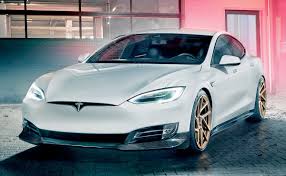
Autonomous vehicles: Work using advanced technology, utilizing infrared sensors, video cameras, and learning systems.
•What are its main features or functions? What does it do?
In the most basic systems, it can alert a driver to an unsafe distance between them and the car in front of them. It can apply the brakes; and in other vehicles it can use infrared sensors to parallel park. In the most advanced cases it can operate without driver intervention.
•Who is going to use it?
Taxi services, shipping and trucking services as well as the general populous.
•Which industry or which firm?
We will be analyzing the ride-sharing industry, more specifically Uber.
•Is there a substitute?
Some semi-autonomous vehicles, or (paralleling) public transport. Otherwise there is no serious substitute as legislation has yet to permit fully autonomous vehicles on the road.
•Similar technology, or similar process
Semi-autonomous systems already in placed in vehicles. Fully autonomous technologies are possible but have yet to be integrated into society.
•Why did you choose this technology?
Autonomous driving is the future. Most of the issues we will discuss today could be reduced or even eradicated by this technology.
•Why is this technology considered important for the “Who”?
This technology will increase Uber’s profits, increase consumer safety and happiness.
Our solution
| Solution 1 | Solution 2 | Solution 3 | |
| Pros | No External Investment in Manufacturing No Profit Share Already Existing Partnership | No External Investment in Manufacturing Ready Made Tech Brand Recognition Networked Fleet that allows for cars to communicate (Safety) | Everything used is owned by Uber Small and convenient No Profit Sharing due to total ownership |
| Cons | Toyota and Volvo are backpacking the technology off Uber Toyota and Volvo can back out at any time with Uber’s technology and go their own way Branch Division for Maintenance | Profit Share Branch Division for Maintenance | Safety concerns in respect to other drivers Would need to open manufacturing plants to create pods Would need whole new branch of engineers, designers, etc. to come up with a pod Need storage and repair areas for vehicle Totally autonomy over data collected |
Solution 2 is superior to other market considerations for the following reasons. First, Uber does not need to perform any sort of research and development since Tesla has already done everything necessary for a self-driving car. Next, Uber would receive brand recognition for partnering with Tesla, as it is regarded as the car brand of the future. This would allow people to feel safer in the Tesla as it’s trusted by the people and it is eco-friendly. The eco-friendly would save Uber money on fuel and the fully autonomous aspect saves labor costs. A boost in business would be prevalent since the car is autonomous and there are no stranger dangers with drivers working in the cars. Uber owning a large fleet of Tesla’s allows the cars to be connected across a network, which could increase safety as the cars communicate with each other. Next to address the cons. While Tesla would require profit share, it would save Uber money in the aspect that it eliminates a competitor from their market and strengthens their own service. Branch division for maintenance is a necessary evil no matter what path Uber takes. At least under Tesla, three are already existing maintenance divisions for Tesla vehicles.
Information to be Communicated
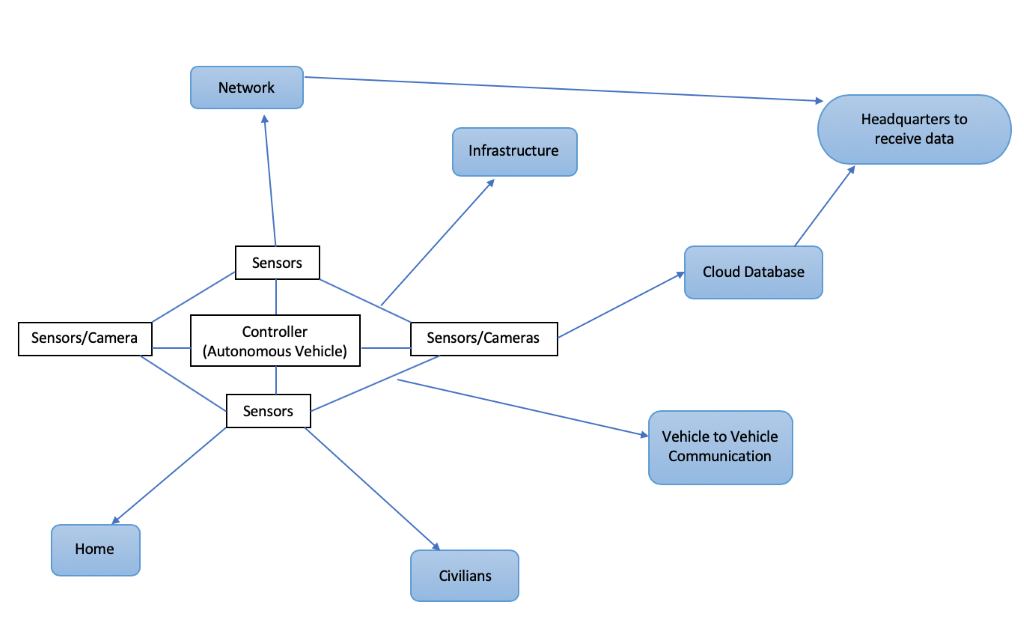
Information about each ride should be communicated back to a headquarters. Here they should receive video surveillance of the vehicle along with reviews from the riders. The video surveillance should include any red flag activities that occurred while in the vehicle. This will allow Uber to monitor their vehicles and any possible issues. Uber can use an opt-out structure for their ride data and sell what they collect to business that want to learn more about where people are going. Data that is sent to the headquarters can include information about what time and place a person is going to. Uber can also play targeted ads that relate to where the passenger is going to, creating more inflows of money.
Types of IT systems used
Facial recognition for inside the vehicle in order to mark red flag activities. Infrared needed to read signs, people, crosswalks, and other traffic indicators. Sensors will be in the bumpers of the car along with the sides for the car to stay on track. The hardware and software are already created by Tesla and inside the vehicle. There would need to be networking and communicating IT system for the cars to work together and communicate back to a headquarters. It is going to need data storage in the vehicle in order to track information about the rides.
Ethical Issue
There are a couple ethical issues with an automated workforce. First, facial recognition technology raises potential concerns. Passengers may not want their facial patterns stored in Uber’s database. To establish trust with its customers, Uber needs to emphasize that this information will not be sold or stolen. Uber will keep its promise by investing in a strong defense system for its database. Second, concerns may arise when Uber lays off its entire population of human drivers. In response, Uber needs to emphasize that new job opportunities will result from these layoffs. An entire workforce of engineers and mechanics will be required to maintain the new fleet of automated vehicles. Furthermore, Uber needs to remind the public that its drivers categorize as self-employed.
Cost/Benefits
According to Uber’s income statement from the year ended 2018, Uber is operating at a monumental loss (-3 million). Uber’s operating expenses divide into research expenses (1.5 million) and selling general/administration (5.23 million). Clearly, the larger expense comes from selling/general administration. Uber could greatly reduce this expense by replacing its human drivers with automated vehicles. Specifically, this would remove the wages expense that it owes drivers after they complete a ride. The firm would also save money by partnering with Tesla for its vehicle supply. If Uber pays, say, 25% of its service revenue to Tesla for the use of its automated vehicles, it would only lose $1,411,750 yearly (according to 2018’s figures). Uber spends that much on research alone, let alone manufacturing and design. Therefore, the firm would save money by partnering with Tesla instead of making their own automated vehicles. The firm would also remove its wages expense for human drivers by doing so.
Contingency and Disaster Recovery plan
Since Uber operates as a ride-share company, and Tesla operates as a car manufacturer, Tesla will be liable for any malfunctions or disasters related to the car. In attempt to avoid potential disasters, however, Uber will offer a “end ride” option on its app. In fact, Uber has already implemented this into its app. Uber just needs to translate this feature into Tesla’s vehicles. Luckily, Tesla vehicles already feature the ability to pull over automatically. This feature is engaged when the driver of a Tesla takes his/her hands off the wheel for an elongated period. If Uber and Tesla can reroute this functionality to work with the “end ride” option on Uber’s app, then the vehicles will be able to pull over on command. Customers can utilize this feature if a strange noise is emitting from the engine, if a tire bursts, or any other safety concern occurs. This feature will likely prevent many disasters. Any unpreventable disasters will be Tesla’s liability as the vehicle manufacturer.
Our Business Diagrams
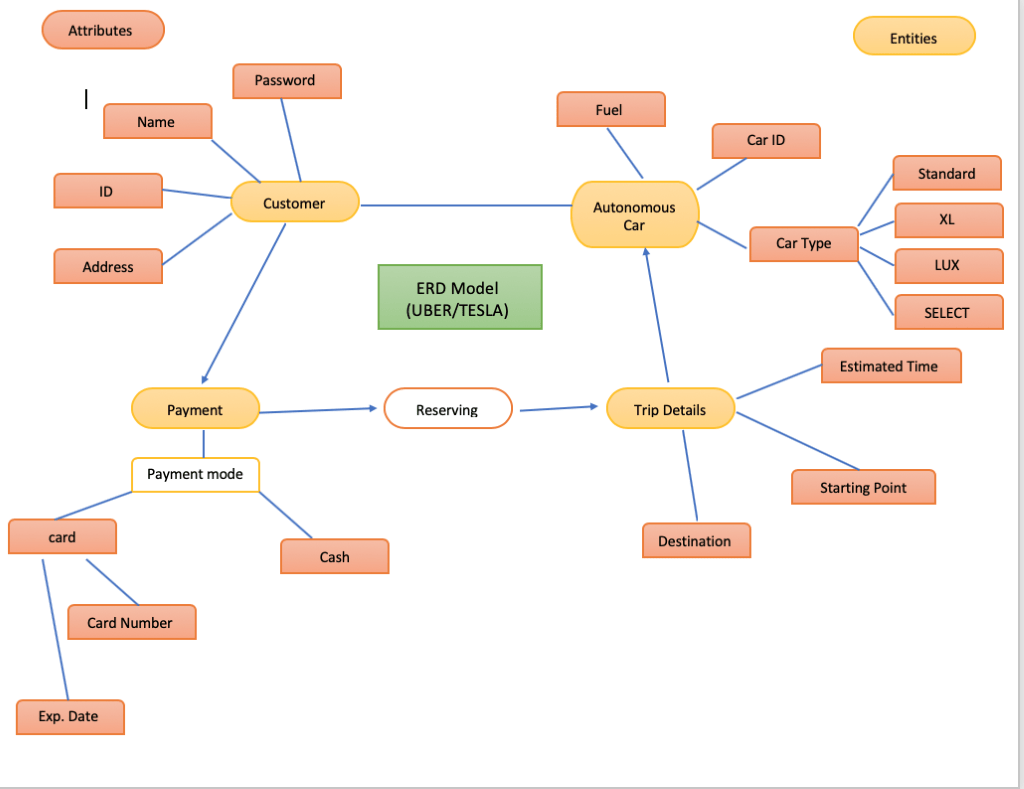
These diagrams show the various connections within our business whether it be through our technology or with how the concept of our business works.
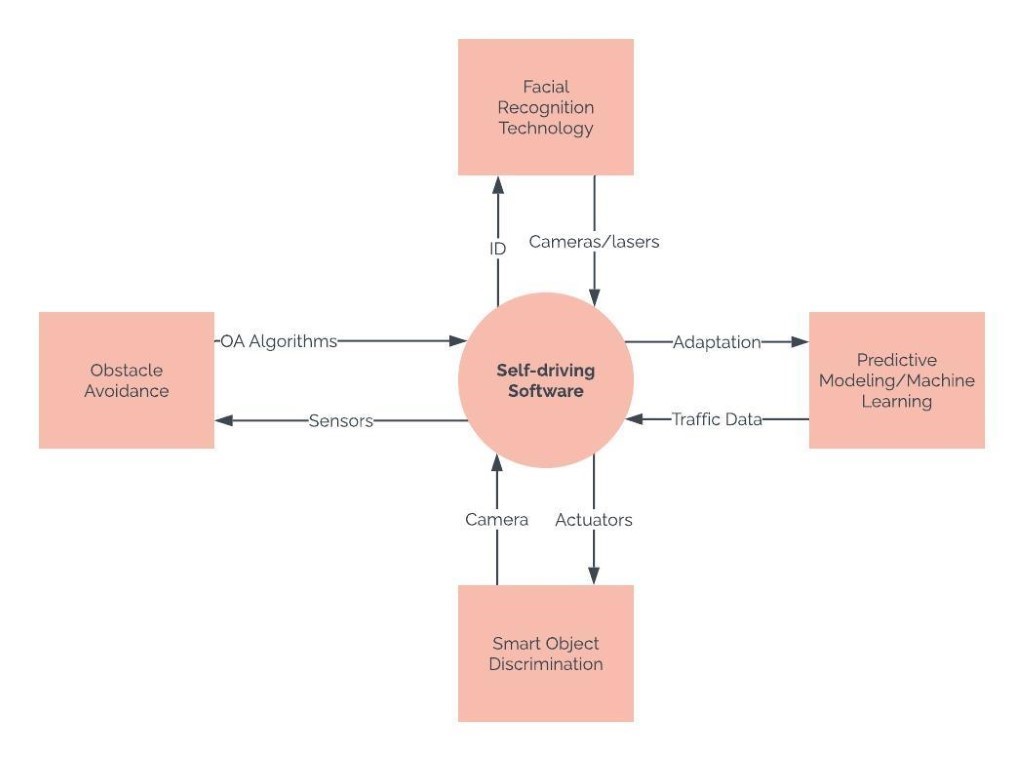
System Communication Network Diagram
ERD Diagram
Works Cited
https://us.norton.com/internetsecurity-iot-how-facial-recognition-software-works.html
https://www.ucsusa.org/resources/self-driving-cars-101
https://phys.org/news/2014-01-smart-recognition-algorithm-doesnt-humans.html
https://finance.yahoo.com/quote/UBER/financials?p=UBER
CatClifford. “Elon Musk: Self-Driving Teslas Are Going to Make Their Owners Money by Competing with Uber, Lyft.” CNBC, CNBC, 5 Apr. 2019, www.cnbc.com/2019/04/05/elon-musk-self-driving-teslas-are-going-to-compete-with-uber-lyft.html.
Coren, Michael J. “California Cops Invented a New Maneuver to Pull over Sleeping Tesla Drivers on Autopilot.” Quartz, Quartz, 3 Dec. 2018, qz.com/1482646/california-police-have-a-way-to-pull-over-sleeping-tesla-drivers-on-autopilot/.
“Free CAD Designs, Files & 3D Models: The GrabCAD Community Library.” Free CAD Designs, Files & 3D Models | The GrabCAD Community Library, grabcad.com/library/energy-induced-intelligent-vehicle.
“How Uber Makes – And Loses – Money.” CB Insights Research, www.cbinsights.com/research/report/how-uber-makes-money/.
“Predictive Modeling: The Only Guide You Need.” MicroStrategy, www.microstrategy.com/us/resources/introductory-guides/predictive-modeling-the-only-guide-you-need.
“Self-Driving Cars Explained.” Union of Concerned Scientists, www.ucsusa.org/resources/self-driving-cars-101.
staff, Science X. “Smart Object Recognition Algorithm Doesn’t Need Humans.” Phys.org, Phys.org, 16 Jan. 2014, phys.org/news/2014-01-smart-recognition-algorithm-doesnt-humans.html.
Symanovich, Steve. “How Does Facial Recognition Work?” Official Site, us.norton.com/internetsecurity-iot-how-facial-recognition-software-works.html.
Tabora, Vince. “Improving Self-Driving Car Safety And Reliability With V2X Protocols.” Medium, Self-Driving Cars, 21 Sept. 2018, medium.com/self-driving-cars/improving-self-driving-car-safety-and-reliability-with-v2x-protocols-1408082bae54.
“Uber Technologies, Inc. (UBER) Income Statement.” Yahoo! Finance, Yahoo!, 9 Feb. 2020, finance.yahoo.com/quote/UBER/financials?p=UBER.
UberATG. “A New Class of Vehicle: Production-Ready Self-Driving.” Medium, Medium, 29 July 2019, medium.com/@UberATG/a-new-class-of-vehicle-production-ready-self-driving-244327c92aba.
“What Is an Autonomous Car? – How Self-Driving Cars Work.” Synopsys, www.synopsys.com/automotive/what-is-autonomous-car.html.
 Autonomous Vehicles